Soup, Stew and Sanity: The Winter Cookery Class That Saves Your Weeknights
There is a particular kind of tiredness that arrives with the first properly dark evening. It is not the dramatic, end-of-term exhaustion that calls for a takeaway and a lie-down. It is quieter than that. It is the feeling of opening the fridge at half five, seeing a leek and a lonely carrot, and deciding that toast is, technically, a meal.
If that sounds familiar, you are not alone — and you are not lazy. Winter asks different things of a home cook. Summer cooking is often about brightness and speed: a tomato salad, something on the barbecue, a quick pasta with whatever looked good at the market. Cold-weather cooking has to work harder. It has to warm you up, stretch across a couple of days and still feel worth the effort when it is pitch dark outside and your energy is somewhere under the sofa.
That is where a well-chosen cookery class can do something a recipe video cannot. Not because it turns you into a different person, but because it gives you a handful of reliable winter formulas you can repeat without thinking. One evening in November or early December can be enough to reset a flagging weeknight routine. The trick is choosing the right kind of class.
Why winter cooking needs a different approach
A winter supper has to be forgiving. It should cope with being made on a Tuesday, eaten on a Wednesday and reheated on a Thursday without turning to mush. It should use ingredients that are cheap and plentiful in a British winter — root vegetables, pulses, cabbage, onions, tougher cuts of meat — and it should not demand four pans and a clean hob at the end.
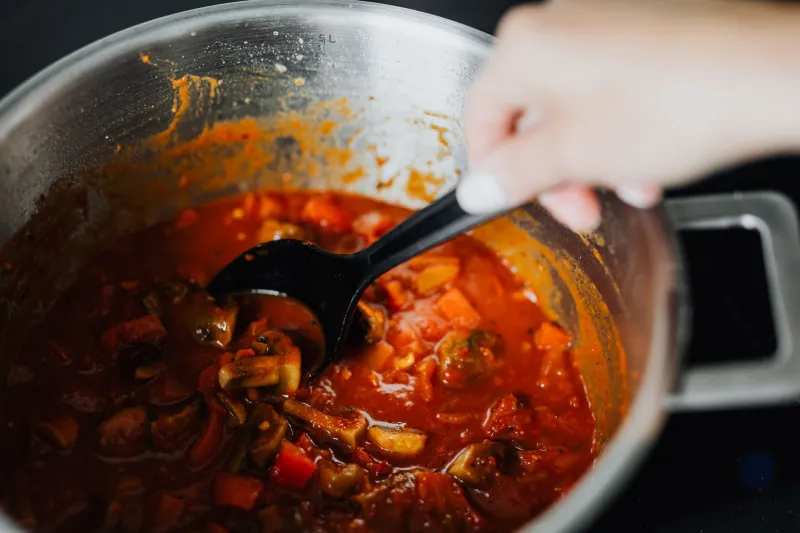
That is why classes built around one-pot cooking, batch-friendly soups and slow braises tend to earn their keep far more than a showpiece dinner. A complicated dish can be a lovely treat, but it rarely fixes the five o'clock slump. A repeatable stew, a dhal that improves overnight or a soup that freezes in portions? That is a different kind of skill. It is kitchen confidence you can actually use on a dark Wednesday.
What a good cold-weather class actually teaches
The best winter classes are not really about following a single recipe. They are about learning a structure. A tutor who shows you how to build flavour in a pot — sweating onions properly, using spices with a bit of confidence, understanding when to add stock and when to leave the lid off — is teaching you something that transfers to dozens of future dinners.
You should leave with more than a tub of soup. Look for a class that gives you a written method with quantities, a clear explanation of what can be frozen and what should not, and at least one idea for using the same base in a different direction. A good braise can become a pie filling. A basic tomato and lentil soup can become a spicy bean pot with a few tweaks. That is the sort of flexibility that keeps winter cooking from feeling like a chore.
The checklist: choose repeatable over showpiece
Before you pay for a class, ask a few practical questions. Not every course will tick every box, but the more of these it meets, the more likely it is to earn its place in your week.
- Does the menu reheat well? If the dishes are designed to be eaten immediately and never seen again, they may not solve your weeknight problem.
- Is there a one-pot or traybake element? Fewer pans is not laziness. It is realistic winter cooking.
- Will you leave with a written formula? A recipe is useful; an understanding of ratios and timings is better. Look for classes that explain why a dish works.
- Are the ingredients easy to find in a normal UK supermarket in winter? You want to be able to remake the dish next week without a trip to a specialist shop.
- Does the class fit a weeknight? A two- to three-hour evening session is often more sustainable than a full-day course when your motivation is already low.
- Can you freeze or portion the results? Batch-friendly cooking is the quiet hero of winter. A class that teaches you to cook once and eat twice is doing you a favour.
- Is the pace realistic for a tired person? You want to leave feeling capable, not mildly traumatised by the speed of a professional kitchen.
- Does it teach a base you can adapt? A single recipe is fine. A technique you can apply to whatever is in the fridge is better.
One evening, then a fortnight of easier dinners
The real value of a winter class is not the dish you make on the night. It is the following Monday, when you already know how to make a decent lentil soup without looking at a screen. It is the Wednesday when you remember that a braise tastes better after a day in the fridge, so you make it ahead and simply reheat it. It is the small shift from deciding what to cook from scratch to assembling something you have already prepared.
That shift does not require a personality change. It requires a few reliable recipes and a bit of practice. A class in mid-November or early December can give you both, just as the darker evenings start to bite. You do not need to become a batch-cooking evangelist or spend every Sunday prepping. You just need three or four winter dishes you trust enough to make when you are tired.
A small note on timing
If you are booking for this winter, look for classes that finish at a sensible hour and are easy to get to after work. A venue with good lighting and a welcoming atmosphere helps more than you might think. And if you can, choose a class that sends you home with something you can actually eat that week — a portion of stew, a tub of soup, a sauce for the freezer. It is a small thing, but it turns a nice evening out into a practical investment in your kitchen confidence.
Winter cooking does not have to be a slog. It just needs a different set of defaults — and sometimes, one good evening in a warm kitchen is all it takes to find them again.