Proof of Skill: Why One Loaf Teaches You More Than Another Menu Night
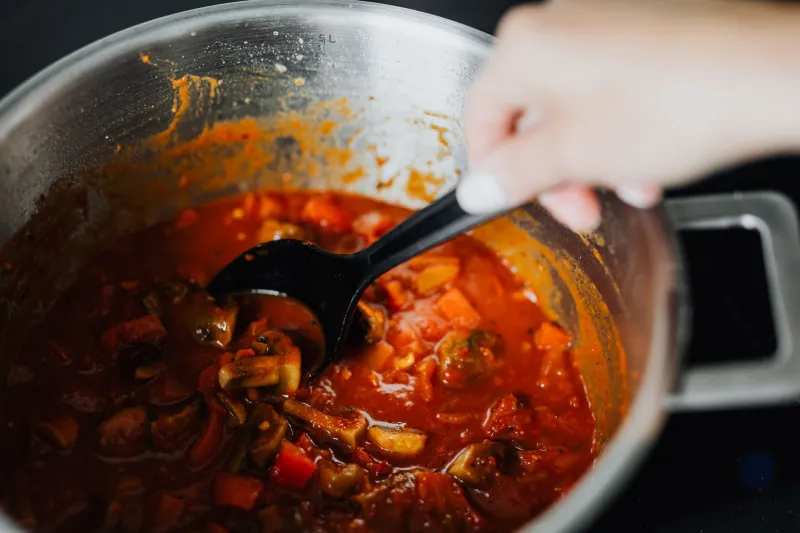
There's a particular kind of buzz that comes from a cookery class where you make someone else's menu. You chop, you stir, you plate something glossy, you eat it with a glass of something cold, and you go home buzzing. Then Tuesday arrives, the fridge is half-empty, and the whole thing has evaporated.
A loaf is different. Slightly less glamorous, sure. But a beginner bread class quietly hands you four or five skills that no riotous dinner-menu session can, and it does it with ingredients that cost less than a coffee.
The trouble with another menu night
Menu-led classes are lovely. They're sociable, they're a decent night out, and the food is usually better than whatever you'd have made at home. What they don't tend to do is change anything.
Why? Because a dinner menu is a set of instructions for a one-off performance. You follow steps in a well-equipped kitchen, with a chef hovering nearby to catch the wobbles. Nothing forces you to understand why the sauce split or when the onions were actually done. The teaching is real, but the transfer is thin.
Bread is a different proposition. You can't bluff it, and you can't taste your way to the finish line halfway through. The dough tells you things, and the bake gives you a verdict.
Four things a loaf will teach you
Timing, and not the clock-watching kind
Recipes say "prove for one hour". Your kitchen says otherwise. Learn to bake bread and you'll start reading the dough instead of the timer — is it domed, is it jiggly, does it spring back slowly when you poke it? That instinct is the single most useful thing you can carry into weeknight cooking. Recipes become a starting point rather than a script.
Touch
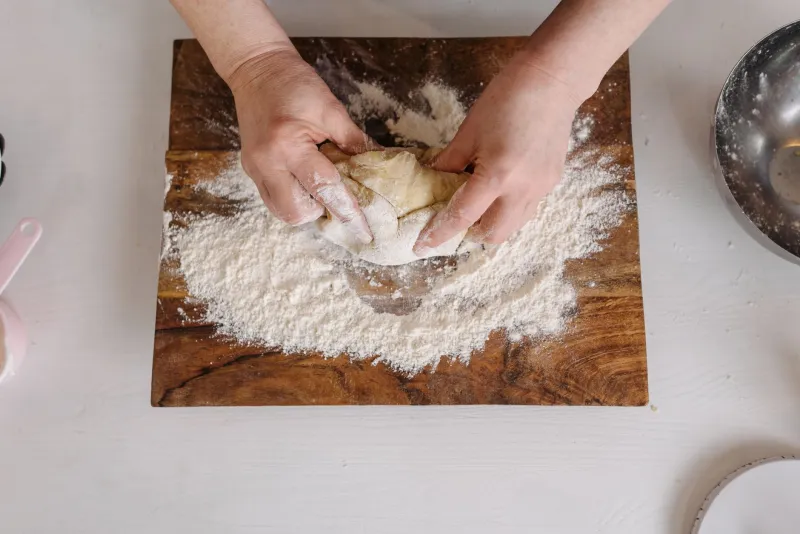
You can't learn the windowpane test from a paragraph. You have to feel the dough go from shaggy to smooth, from slack to taut. Bread classes are almost always hands-on for exactly this reason, and that contact builds a kind of physical memory. It's the same sense you'll later use to tell when a steak is rested, when pastry is overworked, or when a risotto has loosened enough.
Fermentation (and patience)
Bread is the cheapest, kindest introduction to fermentation you'll find. There's no brewing kit, no expensive jar of culture, no risk of anyone getting ill. Just flour, water, salt, yeast, and time. Once you've watched a dough double and then felt what over-proving does to it, the whole idea of "letting things sit" stops being mysterious. You'll start to see it everywhere: yoghurt, pickles, overnight oats, a stew that only gets better on day two.
Recovery
Here's the bit almost no other beginner course delivers. Bread goes wrong constantly, and it goes wrong in ways you can salvage. Proved too long? Knock it back, shape it, bake it as a flatbread or a focaccia. Dense crumb? Blitz it into breadcrumbs and move on. That experience — making a mistake, diagnosing it, and turning it into dinner anyway — is the entire foundation of kitchen confidence. It's also why a bread class feels safe: nothing you do in it is precious.
Cheap ingredients, honest feedback
Flour is about as low-stakes as ingredients get. A kilo of strong white bread flour will set you back roughly a pound at most supermarkets, and a single class-sized batch costs pennies. You will not feel guilty about the two loaves that didn't work out.
Compare that to a seafood class, where a mistake costs you twenty quid and a small amount of your dignity. Bread lets you fail cheaply, repeatedly, and in public, which is exactly what learning needs.
And the feedback is immediate. There's no ambiguity about a loaf: it either rose or it didn't, the crust either sang as it cooled or it didn't. That clarity is oddly reassuring.
Where it shows up on a Tuesday
Bread skills don't stay in the bread bin. Once you've spent a day with dough, you'll notice:
- You stop crowding the pan. If you've shaped dough, you understand why things need room.
- You judge by feel. Seasoning, resting, thickening — it all gets a little less reliant on teaspoons.
- You build in waiting time. Bread teaches you that good food often needs you to step away, which is the antidote to frantic 7pm cooking.
- You plan ahead, naturally. A dough proves while you get on with other things. It's mise en place with a pulse.
What to look for in a UK bread class
A few practical things worth checking before you book:
Is it hands-on? Some classes in 2026 are still demonstrations with a tasting at the end. Lovely, but you won't learn touch from a seat in the third row.
How big is the group? Eight to twelve is the sweet spot. Above sixteen, hands go unheld.
Do you take a loaf home? A course that sends you off with nothing but a recipe card and a certificate is a warning sign.
What's the timing? Yeasted classes can fit into a three or four-hour morning. Sourdough needs the better part of a day, or a two-session format with a starter to take away. Both are fine, but know what you're booking.
Does it cover troubleshooting? Ask directly: what happens if my dough is slow, or sticky, or my oven runs hot? A good teacher builds the failures into the day.
Is there a follow-up? A single class is a start. A good school will have a second stage — enrichments, wholemeal, or a shaping-specific session — so you can build rather than restart.
Prices vary a lot: community bakeries and adult education colleges often sit in the £40–£70 bracket, while a full-day session at a dedicated cookery school can run £120–£180. Both can be excellent. The cheap one is not necessarily the weaker one.
Is it too slow for you?
A fair objection: bread takes hours, and some people want instant results from a course. If you're looking for a lively Friday night out, book the dinner menu. If you're looking for a skill that keeps giving, book the loaf.
The two aren't mutually exclusive, of course. But if you're only doing one this winter, be honest about which is more likely to be useful to you in February.
The takeaway
A bread class is not really about bread, or not only. It's about learning to work with something alive, to read feedback and to shrug off a bad result without losing your nerve. That's kitchen confidence in its purest form, and it comes in at around the price of a kilo of flour and a Saturday morning.
Find a course near you, take an apron, and go and get your hands sticky.