Pick First, Cook Better: What a Market-to-Menu Class Changes About the Way You Shop
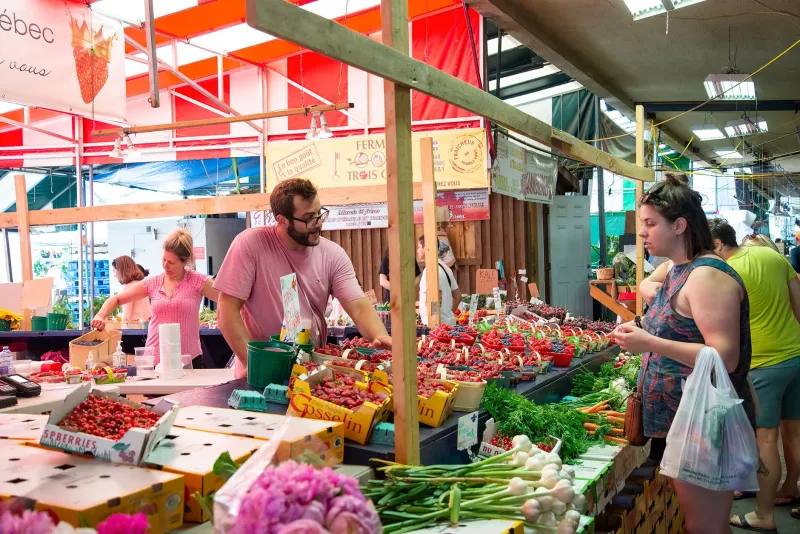
Most cookery classes begin with a tidy row of ingredients, a sharp knife and a tutor saying something reassuring about not worrying if your onions aren’t perfectly uniform. A market-to-menu class begins somewhere less controlled: a greengrocer’s display, a butcher’s counter or a busy Saturday market. You turn up expecting to cook. First, you have to shop.
That might sound like an unnecessary detour. It isn’t. For home cooks who can follow a recipe but freeze when faced with a pile of unfamiliar produce, starting at the shop can be the most useful part of the day. It turns ingredient selection from an afterthought into a skill you can practise.
The shopping trip is not a warm-up act
In a standard recipe, the ingredients are already decided. The recipe says two courgettes, a bunch of parsley and 300g of something. The hard part — knowing whether those courgettes are any good, whether the parsley is worth buying, whether there’s a better option for the money — has been removed.
Market-to-menu courses put that back. You walk with a tutor who asks stallholders questions, points out signs of freshness and explains why one cabbage is worth taking home while another can stay where it is. You notice that the same vegetable can look completely different from one week to the next. You learn that “what’s good today?” is a more useful opening line than “I need exactly this list.”
That is kitchen confidence in its earliest form: making a decision before the heat is on.
What a typical market-to-menu day looks like
No two courses are identical, but the good ones tend to follow a sensible rhythm. You meet the tutor at a market or high street cluster of shops, spend time browsing and asking questions, then buy a shared set of ingredients based on what looks best. Back in the kitchen, the menu is shaped around that haul rather than a rigid plan written months earlier.
Some courses focus on a particular cuisine and use the market trip to explain unfamiliar herbs, chillies or cuts of meat. Others are closer to a general skills day: how to choose fish, how to judge a joint of meat, how to build a meal from whatever the greengrocer has in abundance. The cooking that follows might be simple. The point is that the ingredients have been chosen with intent.
A well-run course will also be honest about budget. If the shopping is included in the fee, you should know roughly what the class will spend and whether there is wiggle room for a few extras. If you are paying separately, ask for a guide before you arrive. A market can be a brilliant place to learn that good food does not have to mean expensive food, but only if the tutor treats budget as part of the lesson rather than an awkward afterthought.
Seasonality you can actually taste
British seasonality can sound like a poster in a farm shop: roots in winter, asparagus in spring, berries in summer. In practice, it is more interesting than that. A late-autumn market might be full of parsnips, leeks, cabbages, apples and game. A coastal fishmonger might have a different story from an inland butcher. The useful lesson is not memorising a calendar. It is learning to read the room.
When you shop with a tutor, you start to notice cues. What is piled high? What looks tired? What is being sold cheaply because there is too much of it? What is worth paying a little more for because it is at its best? Those questions carry straight back to your own weekly shop. They also make cooking more enjoyable, because a meal built around good ingredients needs less rescuing.
This is where market-to-menu classes differ from a pure technique session. A knife skills class can teach you to cut an onion properly. A market class can teach you why the onion you chose matters, how to store it and what to do when the recipe asks for something you cannot find.
The confidence comes from deciding, not just following
There is a particular kind of panic that sets in when a recipe assumes you have exactly the right ingredient and you don’t. Many home cooks deal with this by buying more than they need, sticking rigidly to one list or avoiding recipes that look unpredictable. None of that builds flexibility.
A market-to-menu course applies gentle pressure. You have to choose. You have to adapt. You might plan a dish around purple sprouting broccoli and end up with a bag of kale instead. The tutor is there to guide you, but you are the one making the call. That small act of agency is what makes the lesson stick. You leave knowing you can walk into a shop, look around and build dinner from what is actually available.
What to look for before you book
If you are considering a market-to-menu class in 2026, a few checks will tell you a lot about whether it is right for you.
- Is the market visit genuine? Ask whether you will be choosing ingredients or simply collecting a pre-packed box. Both can be useful, but they are different experiences.
- How big is the group? A tutor cannot answer questions or help you choose if twelve people are crowded around one stall. Smaller groups tend to work better for shopping-based courses.
- Is the shopping budget clear? Check whether ingredients are included, what happens if prices are higher than expected and whether you need to bring cash.
- What happens if the weather is grim? Outdoor markets are wonderful until it is sideways rain. A sensible course will have a covered market, indoor shops or a wet-weather plan.
- Can they handle dietary needs? A market trip should not leave you watching while everyone else buys meat or dairy. Ask in advance.
- What will you take home? Some courses cook and eat together; others send you off with portions. Ask about containers and whether there is a place to store bags.
It is also worth asking what the tutor wants you to learn. “We’ll cook three dishes” is fine. “You’ll learn how to choose fish, build a menu around a cheap cut and use up the rest of the bunch” is better. The shopping trip should have a purpose beyond making the day feel more authentic.
A small shift that lasts longer than one recipe
You do not need to become a market regular to benefit from this style of class. The real change is in how you approach your normal shop. You might start asking the person on the fish counter what is good that day. You might buy the slightly cheaper bag of carrots and plan around them. You might leave a recipe’s ingredient list flexible enough to accommodate what is actually in front of you.
That is not a dramatic life overhaul. It is a quieter skill: choosing well before you cook. Market-to-menu classes teach it because they have to. The kitchen is only half the classroom. The other half is the shop, and that is exactly where many home cooks need a little more confidence.