Onion Economics: Why a Knife Skills Class Is the Smartest £70 in Your Kitchen
Nobody books a knife skills class because they are fired up about onions. They book it because they are tired. Tired of forty minutes to get a weekday dinner on the table, tired of a chopping board that looks like the aftermath of a food fight, tired of the nagging feeling that everyone else is doing something in the kitchen that they somehow missed.
The good news is that they missed something teachable. Knife work is not a personality trait. It is a set of small physical habits, and a decent two-hour session will hand you most of them.
The onion test
Onions are the cheapest practice material in Britain and the honest yardstick for everything else. If you can dice an onion quickly, evenly and without thinking about your fingers, you can dice a shallot, a carrot, a stick of celery and most of the base of your cooking.
Run the numbers. If better knife work saves you five minutes a day, that is around thirty hours a year — nearly four working days — spent not standing at the hob wondering where the evening went. Add the waste: a clumsy hand shaves a good fifth off an onion and leaves half a carrot on the board. Whole vegetables are cheaper per kilo than the pre-chopped tubs, and the gap widens once you stop throwing away the trimmings. A £60–£90 class pays for itself quietly, in about a year of ordinary cooking, and then keeps paying.
What a proper session actually covers
A good class is not a tour of fancy cuts. It is a sequence, and it usually runs something like this:
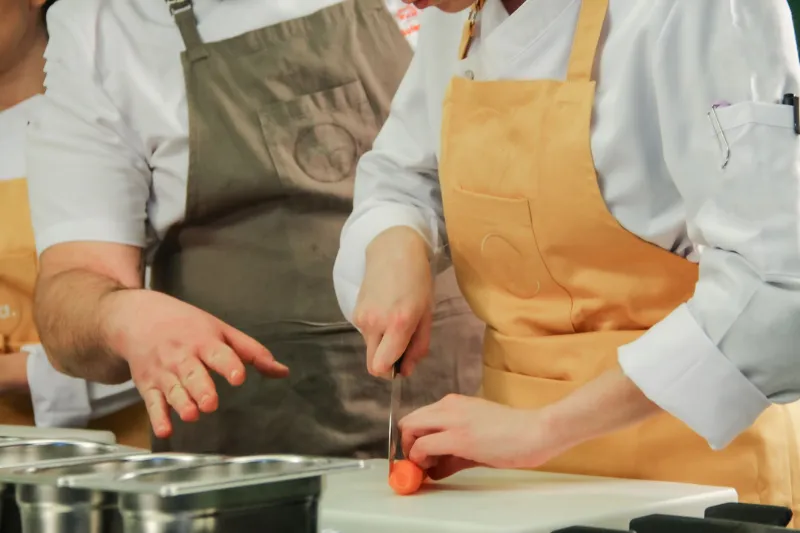
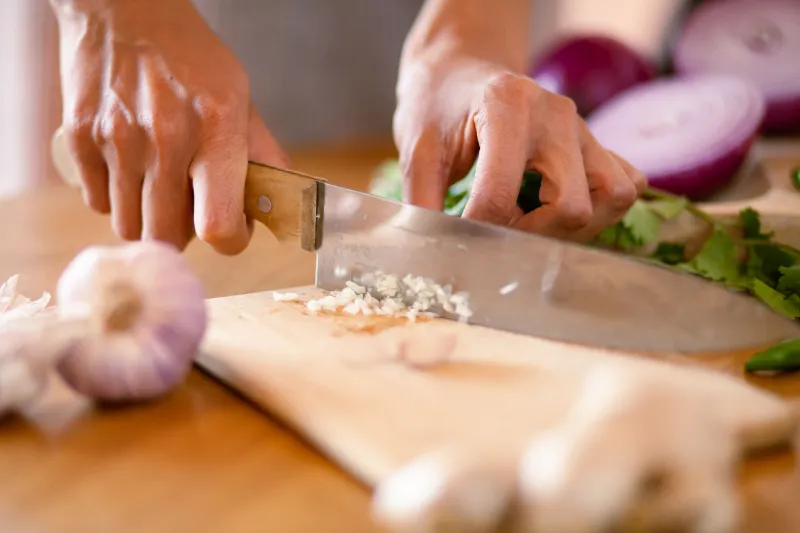
- Grip and the claw. How to hold the blade so the knife becomes an extension of your hand, and how to curl your guiding hand so your knuckles — not your fingertips — take the lead.
- Bench setup. A damp tea towel under the board, a board at the right height, a bin within reach rather than across the kitchen. Small things that quietly halve the faff.
- Knife anatomy. Heel, spine, bolster, tip. Why the heel does the heavy work, why a blunt knife is more dangerous than a sharp one, and why you should never scrape food off a board with the edge.
- Honing versus sharpening. A steel once a week, a stone or a professional sharpen a couple of times a year. Expect the tutor to show you what a genuinely sharp knife feels like on a tomato.
- The core cuts, in order. Rough chop, slices, batons, dice, brunoise — each one built from the last. Then chiffonade for herbs and leafy greens.
- The awkward jobs. Garlic, chillies, butternut squash, and jointing a chicken. These are where most home cooks lose confidence, and where a tutor standing next to you is worth their weight in gold.
- Care and storage. Wash and dry by hand, store on a magnetic strip or in a block, keep it out of the dishwasher unless you enjoy buying knives.
How to tell a skills class from a demo with knives in it
Plenty of courses bolt the words knife skills onto a description of a three-course dinner. Here is the filter.
Good signs: the majority of the session has a knife in your hand; class sizes of eight to twelve; knives supplied and properly sharpened, with a sharpening station set up; a syllabus that names the cuts; the tutor watching your grip rather than the clock; a take-home sheet so you can practise.
Red flags: twenty-plus people watching one person demonstrate; everyone making the same stew from a recipe card; no mention of sharpening anywhere; a two-hour class that also promises bread, pudding and a wine tasting.
It is also worth asking two questions when you book, whether that is for a session in 2026 or a voucher for later: do I need to bring my own knife, and how much of the time am I actually cutting? The answers tell you almost everything.
The week after matters more than the class
A class plants the habits; repetition makes them stick. Give yourself ten to fifteen minutes, three times a week, for a fortnight.
Buy a kilo of onions, dice them all, and freeze what you do not need in bags. Turn carrots into batons, then into dice. Shred a bunch of parsley. Practise the claw at half speed until it stops feeling strange, and keep your board tidy as you go — a clear board is a clear head.
You will know it is working when the onion takes ninety seconds instead of four minutes, when your dice cooks at the same rate instead of some pieces collapsing while others stay raw, and when garlic stops turning into a sticky mess under the blade.
That is the point of the whole exercise. Not knife tricks, not speed for its own sake, but a calmer, quicker, quieter kitchen where the chopping is the easy part and the cooking gets your attention instead.