The Savvy Cook's Checklist: 12 Questions to Ask Before Paying for a Cookery Class
Booking a cookery course should feel exciting, not like a gamble. The website looks lovely. The photos are warm and floury. The price is clear enough. But a glossy brochure cannot tell you whether you will spend the day actually cooking or watching someone else do it while you take notes. Before you pay, ask better questions.
Why the details matter
A cookery course can build real confidence or fill an afternoon. The difference usually comes down to the details: who is teaching, how many people are in the room, what is included, and what you will be able to do when you get home. None of that is spoiling the fun. It is how you choose a course that suits you.
The 12 questions worth asking
1. How many students are there per tutor? A small group gives you attention. Ask for the ratio, not just the maximum class size. If there are 20 people and one tutor, you will mostly watch.
2. Who is teaching, and what are their credentials? A friendly host is not the same as a skilled teacher. Ask about professional experience and, just as importantly, experience teaching home cooks.
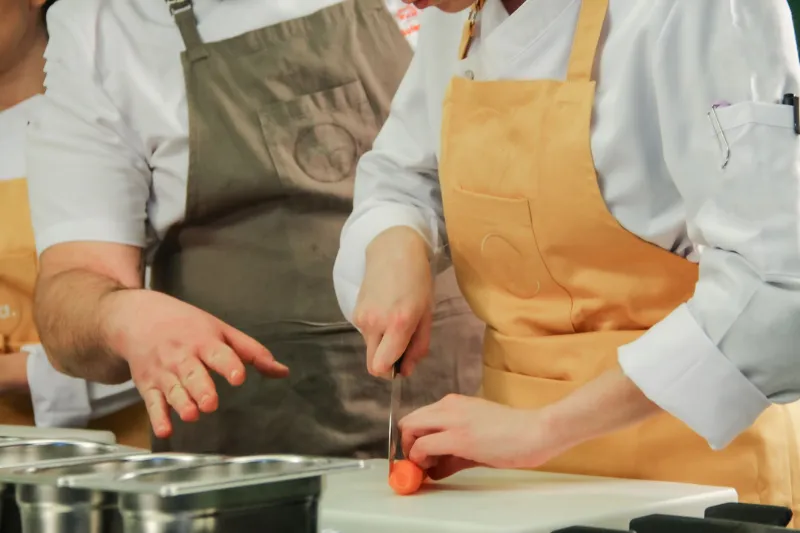
3. Is it hands-on, a demonstration, or a mix? Find out how much you will actually cook. A good hands-on class has you chopping, seasoning and tasting, not just arranging garnish.
4. What skill level is it aimed at? A beginners' class should assume nothing. An intermediate class should stretch you. If the description is vague, ask what you need to know before you arrive.
5. What exactly is included in the price? Ingredients, equipment, apron, recipe pack, lunch, drinks — ask. A cheap class can become expensive if you need to bring half the kit.
6. How are allergies and dietary needs handled? Ask about nuts, gluten, dairy, shellfish and anything else that matters to you. A good provider will explain how they separate ingredients and whether they can adapt the menu.
7. What equipment will I use? Will you cook on domestic hobs and ovens or professional kit? Both can be useful, but if you want to recreate the dish at home, domestic equipment is a bonus.
8. What will I take home? Food, recipes, notes, a certificate, a new contact? Ask whether the recipes are written clearly enough to repeat without the tutor.
9. What is the cancellation and refund policy? Life happens. Ask what happens if you are ill, if the course is cancelled, or if you need to move to another date.
10. How is the day structured? Ask about start and finish times, breaks, cleaning and whether the pace is rushed. A relaxed day can still be packed with learning.
11. What happens after the course? Do you get follow-up notes, a recipe pack by email, or access to a group? Good providers want you to keep cooking.
12. Can I see independent reviews or speak to a past student? Testimonials on a website are useful, but independent reviews and honest conversations are better. Ask.
Red flags to watch for
Be wary of a course that cannot tell you the class size, the tutor's name or what is included. Be cautious if every question is answered with 'it depends' and no detail. A good provider will not mind you asking. They want the right students in the room.
How to use this checklist
You do not need to interrogate anyone. Pick the three questions that matter most to you — maybe allergens, class size and what you will cook — and ask them before you book. If the answers are clear, you can relax and look forward to it. If they are vague, keep looking.
The confidence test
The best course is not the most expensive or the most photogenic. It is the one that sends you home tired, full and a little more capable than when you arrived. Ask the questions. Then book the course that makes you feel like cooking.