The Jar That Teaches Back: Why a Fermentation Class Is Worth Your Saturday
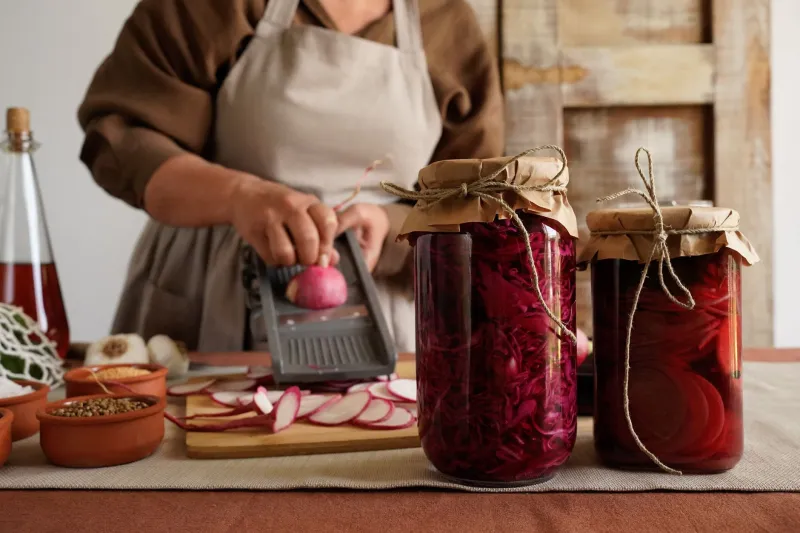
The class that makes your kitchen feel bigger
Most cookery classes send you home with a full stomach and a recipe you might cook once. A fermentation class sends you home with a jar that keeps changing after you leave. That’s the quiet magic of it. You salt some cabbage, pack it down, wait, and learn to read what’s happening through the glass. It’s not a trendy hobby to display on a shelf. It’s a repeatable skill that turns a modest bag of seasonal veg into something you’ll genuinely eat.
That distinction matters. Fermentation can look intimidating online — jars bubbling ominously, talk of mould, stern warnings about sterilising everything. A good class cuts through that. It gives you a simple framework: enough salt, an anaerobic environment, a sensible temperature and a bit of patience. Once you’ve made one successful batch with your own hands, the fear tends to shrink.
Salt, time and a clean jar — the three things you actually learn
A decent sauerkraut or kimchi class will spend less time on trendy flavour combinations and more time on the boring bits that keep you safe. That’s a good sign. The boring bits are the skill.
Salt ratio. For a basic vegetable ferment, roughly 2% salt by weight is a sensible starting point. A class should show you how to weigh your veg and salt properly, not just sprinkle and hope. If you’re making a brine, you’ll learn the difference between salt dissolved in water and salt rubbed into shredded cabbage. Both work; they’re not interchangeable.
Time and temperature. Fermentation isn’t a fixed timer. A warm kitchen speeds things up; a cool one slows them down. Your instructor should teach you how to taste as you go, rather than telling you a jar will be ready on a specific date. That’s a more honest — and more useful — way to learn.
Clean kit, not sterile theatre. You need clean jars, clean hands and a way to keep the veg submerged. You don’t need a laboratory. A class that makes fermentation feel achievable in a normal UK kitchen is worth more than one that sells you a cupboard full of gadgets.
When a jar looks suspicious
This is the question most people bring to a fermentation class, even if they don’t ask it out loud. What do I do when it looks wrong?
A good teacher will cover the difference between harmless and not. A little white film on the surface, a bit of sediment, a sharp tang — these are usually normal. Fuzzy mould, a smell that makes you recoil, or slime that feels wrong are signs to stop and ask questions. The class should give you permission to trust your senses and clear guidance on when to bin it. That’s not failure; it’s part of learning to cook with living ingredients.
What you’re really learning is judgement. Recipes can’t cover every jar in every kitchen. A class can help you build the confidence to make a call.
What to look for in a fermentation class
Before you book, run through a short checklist:
- Hands-on, not demo-only. You want to salt, pack and seal your own jar. Watching someone else do it is useful, but it isn’t the same.
- Clear salt ratios. The instructor should explain the maths, not guard it like a secret.
- Safety covered plainly. Mould, brine, submersion and hygiene should be discussed without either scaremongering or hand-waving.
- A jar to take home. Ideally one you’ve made yourself, with a label and a rough timeline.
- A seasonal approach. Ask whether they use British seasonal veg. A class that works with cabbage, carrots, beetroot or cauliflowers in their proper season is more useful than one that relies on imported ingredients.
- Small enough to ask questions. You don’t need a huge room. You do need time to get your hands in the bowl.
A UK note: seasonal veg and the food-waste win
Fermentation is one of the most practical answers to the half-cabbage problem. In late autumn and winter, British cabbage, carrots, beetroot, celeriac and cauliflower are plentiful and often cheap. A jar of sauerkraut can absorb odds and ends that might otherwise linger in the drawer. That’s not just thrifty; it’s a genuinely useful habit for a household trying to waste less.
A class should help you see that connection. You’re not buying a hobby. You’re learning a way to stretch a veg box, use up a glut and make something that sits happily in the fridge for weeks. In a year when plenty of us are trying to cook more carefully, that’s a skill with a very practical payoff.
The confidence bit nobody mentions
There’s a moment in a good fermentation class when you realise you’re not following a recipe any more. You’re judging. You’re tasting. You’re adjusting. That’s the shift from collecting instructions to actually cooking. It’s the same shift a knife skills class gives you, or a bread class. Fermentation just happens to do it with a jar and a bit of time.
So if you’ve been curious about sauerkraut or kimchi but keep putting it off, a hands-on class is a sensible way in. You’ll leave with a jar, a ratio and a bit less fear. The jar will keep teaching you after the class is over — and that’s a pretty good return on a Saturday.