Your Next Cookery Class Shouldn't Be a Menu Choice
Open almost any UK cookery school's booking page and you will see the same sorting logic: Italian, Thai, Indian, French, baking, maybe a festive preserve session tucked at the bottom. It is an easy way to browse, and it makes for attractive gift vouchers. But if you are booking for yourself, choosing by cuisine can quietly send you home with a nice memory of one dish and very little that changes how you cook on a Tuesday night.
That is not a argument against cuisine. It is an argument against letting the menu do the choosing for you. A good class should leave you with something more durable than a recipe card. The useful question is not 'do I fancy cooking Thai food?' but 'what exactly do I want to stop getting wrong in my own kitchen?'
Why the cuisine filter feels so tempting
Cuisine is the easiest shelf to browse. We all know whether we like Italian food or fancy a curry. It also promises a clear outcome: you will make pasta, or a curry, or a cake. For a gift, that certainty is appealing. For a beginner, it feels less intimidating than a class called 'emulsions and heat control'.
But menus can flatter us into the wrong booking. You might choose a pasta-making class because you love eating pasta, then discover the real lesson was about gluten development, resting dough and shaping. Good. But if your actual frustration is that your sauces split or your stir-fries go soggy, the pasta class may not touch the thing you need. You will have had a lovely afternoon and still be stuck at the same stove.
The same applies to baking. A class making decorative celebration cakes may be splendid fun, but it might not teach you why your sponge sinks. If you want a more reliable everyday bake, you need a class that explains creaming, folding, oven temperatures and the point at which a batter turns. The menu is the hook; the technique is the takeaway.
A frustration-to-skill map
A useful way to shop is to start with the annoyance you meet most often at home. Then look for a class description that names the skill, not just the dish.
| What goes wrong at home | Skill worth learning | What to look for in a class |
|---|---|---|
| Sauces split or taste flat | Emulsions, reduction, seasoning in layers | A class that makes several sauces and explains why they hold or fail |
| Rice turns out mushy or crunchy | Absorption, ratio, resting and heat control | Rice or grain sessions that cover more than one method |
| Chicken or pork comes out dry | Brining, resting, temperature and pan heat | Butchery or meat cookery classes with thermometer work |
| Stir-fries are watery rather than crisp | Wok heat, batch cooking, preparation order | High-heat or wok-based classes with a strong prep focus |
| Pastry shrinks or tears | Resting, gluten, rolling and lining | Pastry classes that include blind baking and troubleshooting |
| Bread is dense or unpredictable | Fermentation, hydration, shaping and proving | Bread classes that discuss time and temperature, not just a recipe |
| Weeknight cooking feels chaotic | Knife skills, prep order, batch planning | Practical classes with a strong mise en place element |
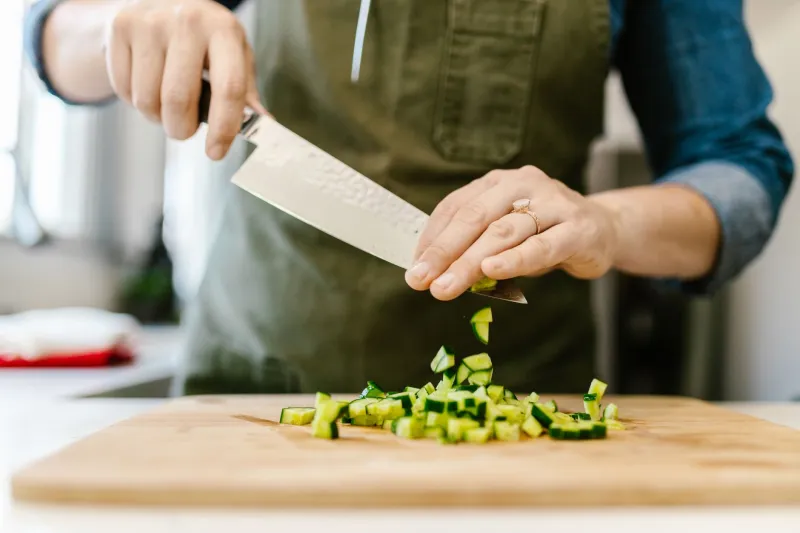
You do not need to become a technician. You need a class that connects a technique to your own kitchen. A knife skills session, for example, can seem less glamorous than a regional cuisine class, but it makes every future meal faster and safer. That is the sort of return on investment worth considering.
What a technique-led class actually looks like
It is not necessarily a serious, white-jacket affair. Technique-led teaching can be warm, hands-on and full of chatter. The difference is in what the tutor keeps returning to. Instead of simply saying 'add the cream and stir', they explain why the pan comes off the heat, what happens if it boils, and how to rescue it when it does. They show you the warning signs rather than only the finished plate.
Look for descriptions that mention methods: braising, roasting, fermenting, kneading, filleting, emulsifying, tempering. Look for phrases like 'understanding', 'troubleshooting', 'why it works' or 'foundations'. Those are clues that the school is selling a skill, not just an evening out. A menu-led class can still be excellent, but if the description never mentions the underlying method, you may be paying for a recipe demonstration.
This is also where small local classes can shine. A community centre or college evening class may not have the polished website of a big cookery school, but it might offer exactly the slow, repetitive practice you need. On the other hand, a big-name school may have better equipment and a tutor who can explain the science. Neither is automatically better. The fit matters more than the brand.
Questions to ask before you book
A quick email or phone call can save you a wasted Saturday. Ask what percentage of the class is hands-on. Ask whether you will work individually or in groups, and whether you will take food home. Ask what the tutor wants you to be able to do by the end that you could not do at the start.
Then get specific. If you are booking to fix dry roast chicken, ask whether the class covers resting and temperature. If you want better sauces, ask whether it includes a broken sauce and how to rescue it. If you are a nervous cook, ask how many people are in the room and whether the tutor can accommodate different paces. None of these questions are fussy. They are the same questions you would ask before buying any course.
It also helps to ask what happens if something goes wrong. Good teaching does not hide failure; it uses it. A tutor who is willing to say 'this is what a split sauce looks like, now watch me bring it back' is probably teaching something useful.
Cuisine still matters, just not first
None of this means you should ignore what you enjoy eating. Enjoyment is why most of us cook. If you love Thai food, a Thai class may be the thing that gets you into the kitchen with enthusiasm, and enthusiasm is not a small thing. The point is to book with your eyes open: choose the cuisine because it will keep you interested, but check that the class also teaches the skill you actually need.
So next time you are browsing, try a different order. Start with the frustration. Find the skill. Then pick the cuisine that makes that skill feel exciting. A class that sends you home able to sharpen a knife, rescue a sauce or judge when a chicken is properly rested is worth more than a folder of recipes you never quite repeat. Book the skill, enjoy the menu, and let the confidence follow.